Every engagement runs in four steps.
Assess, train, reinforce, report. The habit is the same in every step: check the request before you act on it.

- 01
Assess
A baseline check of what staff know and where the organisation is exposed.
- 02
Train
Facilitated sessions for each audience, from frontline staff to the board.
- 03
Reinforce
Wallet cards, posters, manager talking points and nudges that keep the habit alive.
- 04
Report
A plain-language report for leadership, and with Full Armour a before-and-after measure.
People practise. They don’t just watch.
Every module is built from twenty-minute scenario rounds. Each round has a fake request and a genuine one, drawn from your own month-end, systems and local cases.
Decide
Everyone votes privately: genuine or fake?
Defend
Two people argue opposite calls. Then the reveal.
Practise
Someone makes the call-back out loud while the facilitator pushes back.
Debrief
Which letter broke? One rule to keep.
- No blame
- Votes are anonymous. Nobody is named or scored.
- Safe to be wrong
- Mistakes in the room prevent mistakes at work.
- Stories stay
- What people share stays in the room. Lessons leave.
- Your world
- Your month-end, your systems, local cases.
Included in every package.
A setup call
We collect your real numbers, processes and dates, so the scenarios look like your week.
A wallet card
The rule, plus your IT, fraud line and Information Officer numbers. For everyone.
Three nudges
About four minutes each, by email or opt-in WhatsApp.
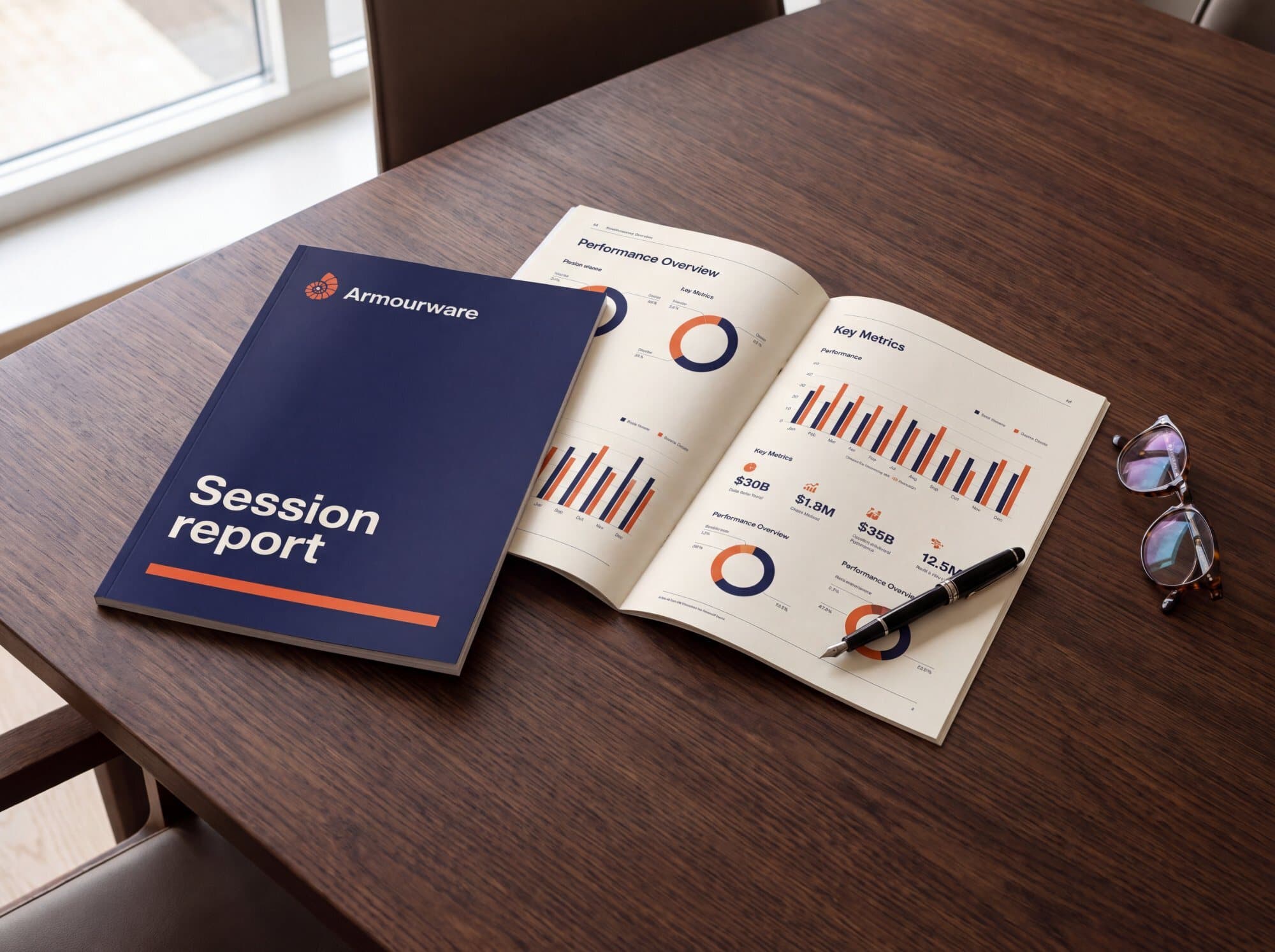
A session report
How the room decided, the themes, and the process gaps we found.
The I’m Aware certificate
Plus a register of who has been trained and who hasn’t. It records attendance; it isn’t an accreditation or a qualification.
Five questions your board will ask.
- 1
How fast do we find out about an attack?
- 2
Can one email or one call redirect our money?
- 3
Are the people attackers target most actually protected?
- 4
If we’re hit tomorrow, who decides what in the first 24 hours?
- 5
Is it safe for our people to say “I’ll call you back” to us?
The training is built to answer every one of them, in language a board can use.
Three steps to your first session.
- 01
A setup call
About 45 minutes with your sponsor and, ideally, IT, finance and HR. We map your numbers, processes and calendar.
- 02
A package and dates
We recommend the package for your risk, and set dates away from month-end and payroll.
- 03
Sessions and follow-up
We run the sessions, report within five working days, and the nudges follow.
Assess the ask. Then ask.
Start with a setup call. We’ll recommend the package that fits your risk, and set dates away from month-end and payroll. Our advice: start with Helm or the Board Briefing, so your leaders go first.