The A.W.A.R.E protocol.
Five steps anyone can remember, from the front desk to the boardroom. It’s the spine of every package and the one habit every module trains: check the request before you act on it.
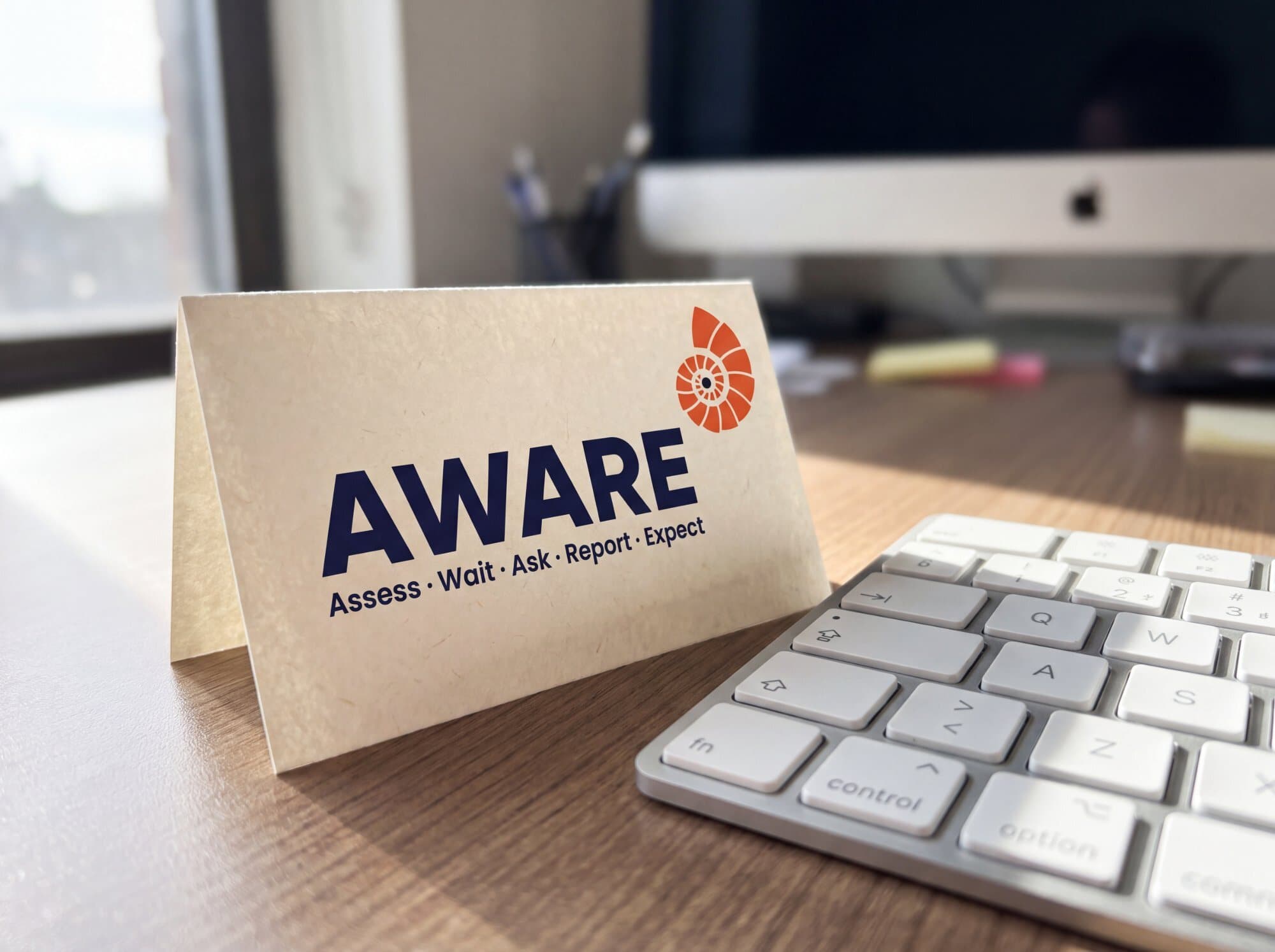
Assess.
What is this asking me to do?
Name the ask: money, data, access or a secret.
A supplier emails to say their banking details have changed. The ask is money, sent somewhere new. Naming it is the first defence.
Wait.
Whose clock am I on?
Don’t act at their speed or inside their channel. Urgency is the scammer’s tool.
“Before 12.” “Before the auditors arrive.” “Don’t call, I’m in a meeting.” When the message sets the clock and the channel, slow down.
Ask.
Check on a channel you choose.
Never a number or link from the message. A cloned voice can’t answer a call-back on a number you already have.
Call back on the number already in your phone, or go to the app or address you always use. Step three is what beats a deepfake: a cloned voice can’t answer a call-back on a number you already have.
Report.
Tell the right people within minutes.
Especially if you already acted. People who report fast are the best alarm an organisation has.
Tell IT or your fraud line within minutes, even if you already clicked or paid. You won’t be in trouble. The first report is often what stops the second victim.
Expect.
Invite others to check you.
When you ask for money, data or access, tell people to call you back. There will be a next one.
There will be a next one. And when you ask others for money, data or access, tell them to check you. Leaders who say it out loud make it safe for everyone.
The line people learn
“I’ll call you back on your usual number. It’s our A.W.A.R.E rule.”
Every session ends with this sentence. It belongs on cards, posters and email signatures, word for word, so nobody has to find the words when it matters.

Expect starts at the top.
Deference to seniority is how most of these attacks get in. When a leader says the sentence below, checking upward stops feeling like doubt.
“If I ever ask you for money, data or access, call me back.”
Assess the ask. Then ask.
Start with a setup call. We’ll recommend the package that fits your risk, and set dates away from month-end and payroll. Our advice: start with Helm or the Board Briefing, so your leaders go first.